


What Exactly Is UHPC?
Technically speaking, Ultra-High Performance Concrete (UHPC) is a cement-based composite material with a compressive strength ranging from 120 to 200 MPa.
To put that into perspective, an area the size of a fingernail can withstand up to 20 t of pressure, more than five times the strength of conventional concrete. Thanks to its exceptional durability, UHPC can achieve a service life comparable to that of the main building structure, while reducing life-cycle costs by nearly 50% over a 50-year period.
The Unlimited Potential of UHPC
Outside Wuhan University of Technology, a graceful fish-belly-shaped UHPC pedestrian bridge now spans Youyi Avenue. Featuring a single-cell thin-walled box girder with elegant curves and a clearance precisely meeting the required 4.5 m, the bridge replaced an older pedestrian crossing demolished during the reconstruction of an elevated roadway. Beyond offering significantly greater durability, it has become a striking new landmark at the university entrance.
In Xi’an, the Xi’an International Football Centre, designed by Zaha Hadid Architects, showcases 36,000 m2 of UHPC façade panels integrated with a double-layer cable-net roof structure. Here, UHPC serves not only as the building envelope but also expresses signature fluid architectural language of Zaha Hadid Architects through its smooth, sculptural forms.
At the Kunming Catholic Church in Yunnan Province, pure white UHPC free-form façade panels define the building’s elegant silhouette, while the interior finishes are also crafted from UHPC. The material’s naturally smooth, refined surface gives this religious building a contemporary aesthetic that transcends traditional architectural expression.
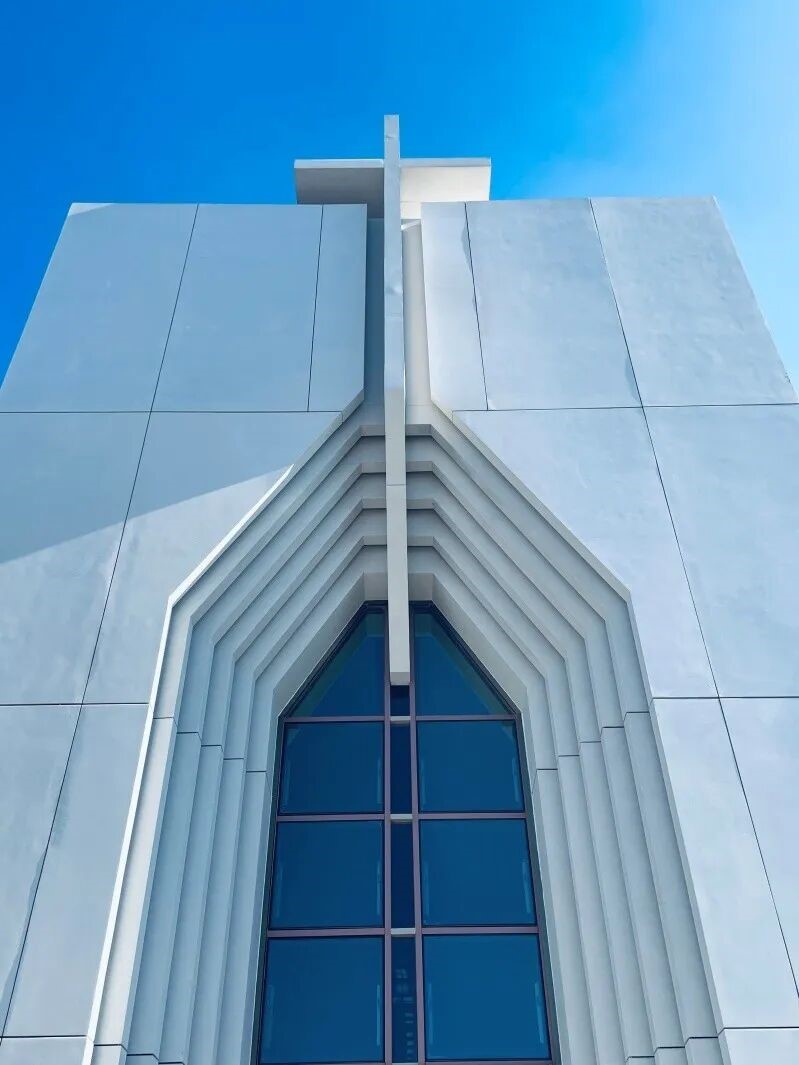
Kunming Catholic Church
More remarkably, the UHPC façade functions as both the exterior finish and an integral structural component, making it China’s first building to achieve full integration of structure and architectural decoration using UHPC. UHPC is no longer merely the “skin” of a building; it has become part of its structural framework.
At the Chongqing Science Association Hall, futuristic UHPC façade panels respond elegantly to the city’s dramatic mountainous terrain. At the Qingshui River Grand Bridge in Wuhu, Anhui Province, 10,126 m2 of UHPC bridge deck pavement continuously withstand repeated heavy traffic, extending the bridge’s service life through outstanding compressive strength and abrasion resistance.
Meanwhile, in Tianmen, Hubei Province, prefabricated UHPC bridge deck panels for both carriageways of the Chenghuang Interchange on the Wuhan–Tianmen Expressway are currently being manufactured. This marks the first prefabricated UHPC bridge deck project of Huaxin Chaokelong New Type Building Materials Technology (Huangshi) Co., Ltd. (“Chaokelong”), and also Hubei Province’s first prefabricated UHPC bridge deck project, representing an important milestone toward the standardization and industrialization of UHPC applications in bridge engineering.
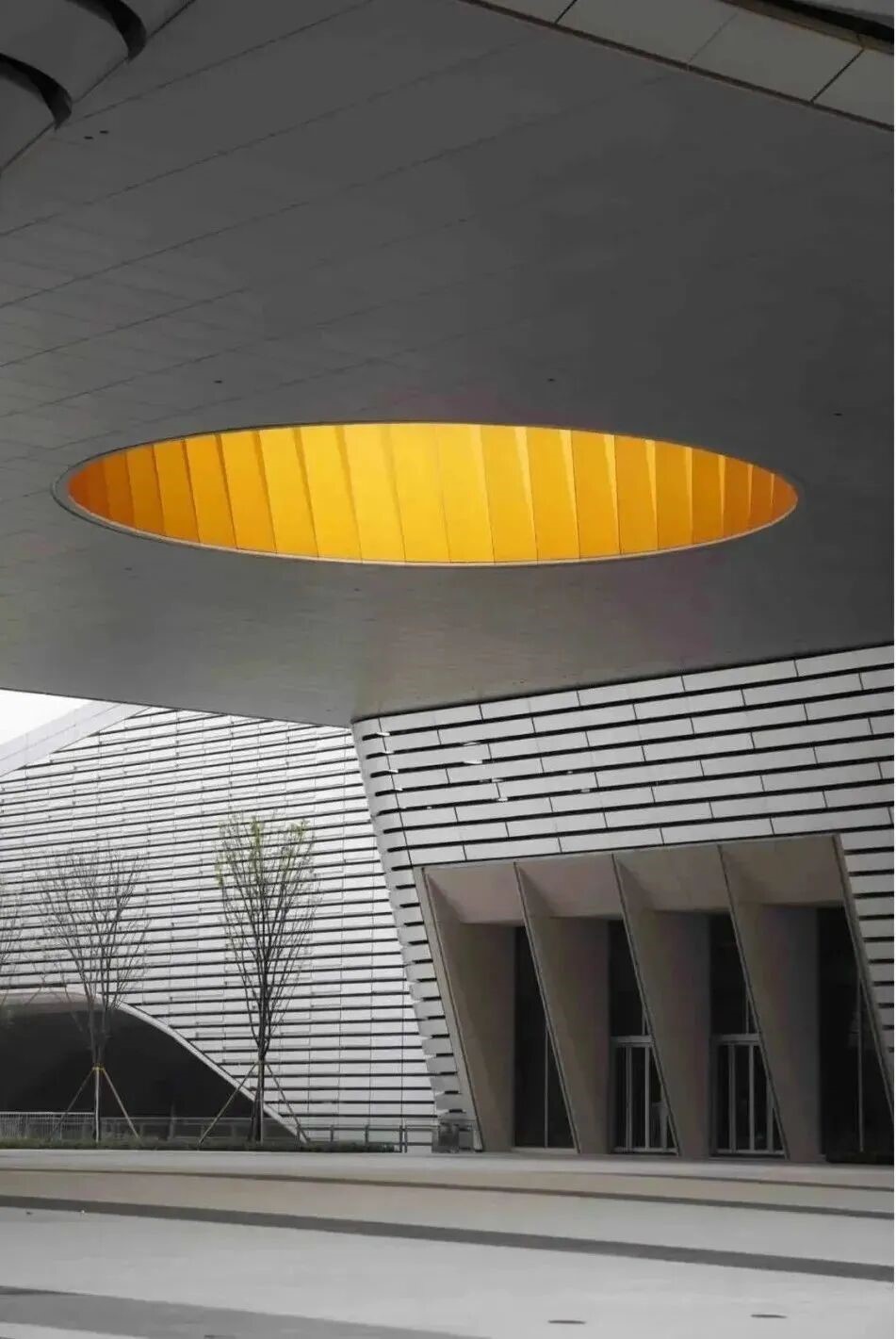
Chongqing Science Association Hall

Qingshui River Grand Bridge
Behind each of these projects lies the same extraordinary material: Ultra-High Performance Concrete (UHPC).
The Value of UHPC Continues to Rise
Traditional concrete is often associated with rough textures, heavy mass, and limited processing precision. UHPC tells a completely different story.
Its exceptional flowability and ultra-fine microstructure allow it to faithfully reproduce even the most intricate mold details. Through a complete manufacturing process that includes digital modeling, precision mold fabrication, controlled casting, and meticulous hand finishing, materials originally developed for skyscraper façades and structural systems can now be transformed into exquisite desktop objects.
This remarkable precision and toughness free concrete from its long-standing image as a coarse, bulky construction material. Dense, smooth, and finely textured, UHPC possesses a surface quality often compared to polished jade. Everyday items such as ashtrays, pen holders, and phone stands made from UHPC serve not only practical purposes but also function as miniature sculptures for modern workspaces.
Equally important, UHPC is inherently free from formaldehyde emissions and other harmful volatile substances. Composed primarily of cement, quartz sand, and fibers, it requires no adhesive binders during production, making it both environmentally friendly and safe for everyday use.
Where Technology Meets Humanity
If technological innovation forms the backbone of UHPC, human creativity gives it its soul.
Concrete originated as an industrial material. Yet when shaped into gears, sculptures, or light-transmitting landscape walls through UHPC technology, it evolves from a cold construction material into a medium for cultural expression and collective memory.
Whether preserving ancient mythical totems in elegant desktop ornaments or transforming century-old stone lions from historic industrial sites into artistic pen holders, these seemingly modest cultural products share the same purpose: carrying profound emotions through one of the world’s strongest construction materials.
One Material. Endless Possibilities
The emergence of UHPC is expanding our imagination of what concrete can become.
When an industry approaches concrete with the craftsmanship once reserved for fine art, views building materials through an artistic lens, and infuses industrial products with cultural warmth, it is no longer simply constructing buildings. It is creating an entirely new architectural aesthetic.
That is exactly what ChaoKelong is striving to achieve.
China Concrete & Cement-based Products Association (CCPA)
Ms. Joselyne Wang
E: icc@ccpa.com.cn
M: +86 1314 6768 231
T: +86 10 5781 1219
http://www.chinaconcrete.com.cn