


The cumulative national production of ready-mixed concrete in 2025 was 2.288 billion m3, a year-on-year decrease of 8.7%. The production of ready-mixed concrete has declined year-on-year for four consecutive years, further confirming industry demand is shifting from a plateau to a downturn.
2025 was a very unusual year, with the impact of changes in the external environment deepening, and the prominent contradiction of strong domestic supply and weak demand. The country has vigorously promoted the development of new quality productive forces tailored to local conditions, strengthened scientific and technological innovation, cultivated and expanded emerging industries, and transformed and upgraded traditional industries, achieving positive results.
Constrained by the downturn in fixed-asset investment in traditional infrastructure, real estate, and the construction industry, the total fixed-asset investment in 2025 fell by 3.8% year-on-year, among which infrastructure investment declined year-on-year, and the slump in real estate investment intensified; in 2025, the cumulative national production of ready-mixed concrete was 2.288 billion cubic meters, a year-on-year decrease of 8.7%. The production of ready-mixed concrete has declined year-on-year for four consecutive years, further confirming industry demand is shifting from a plateau to a downturn.
Review of the Ready-Mixed Concrete Industry
(I) Production Solidifies a Downward Trend
1. Investment Continues to Shrink, Demand for Ready-Mix Concrete Continues to Decline
Since 2022, affected by factors such as the continuous shrinkage of real estate investment and the slowdown in infrastructure investment growth, ready-mixed concrete production has fallen for four consecutive years. In 2025, the cumulative national production of ready-mixed concrete was 2.288 billion m3, a year-on-year decline of 8.7%. The demand for ready-mixed concrete has been continuously shrinking and is still in a downward trend. Figure 1 shows the comparison of ready-mixed concrete production and year-on-year growth rates over the past two decades.
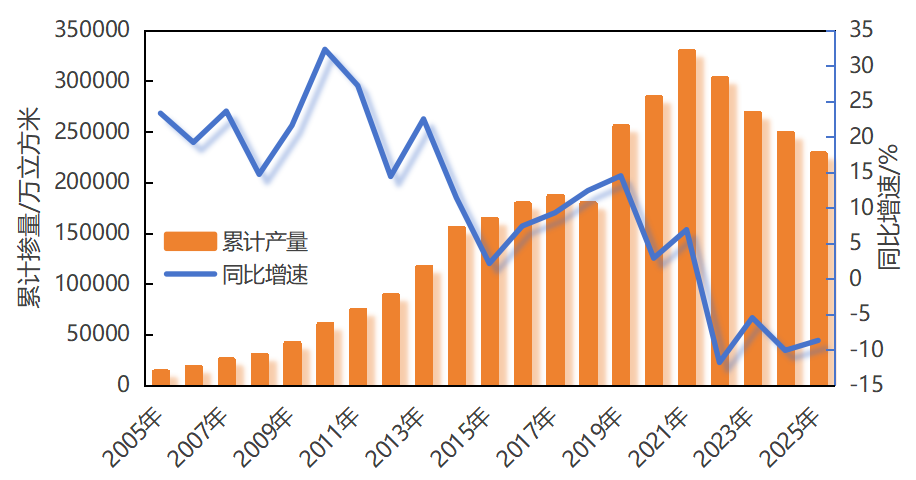
Figure 1 Comparison of Ready-Mixed Concrete Production and Year-on-Year Growth Rates Over the Past Twenty Years
2. The Production Decline in Six Major Regions in 2025 Slows Slightly Compared to the Same Period Last Year
Cumulative production in all six major regions of the country declined year-over-year in 2025, with all regions experiencing drops of more than 5%; the East China region saw a double-digit decline. Compared with the previous year, except for South Central China, the decline in production in the other five regions narrowed slightly. Figure 2 shows the year-on-year growth rate of ready-mixed concrete production in the six major regions nationwide over the past ten years.
From a provincial perspective, in 2025, among the 31 provinces, municipalities, and autonomous regions nationwide, only 4 provinces saw a year-on-year increase in production, while 27 provinces experienced a year-on-year decline in cumulative production. Among the provinces, municipalities, and autonomous regions with declining production, 11 provinces saw a decline of more than 10%, and 2 provinces exceeded 20%. Figure 3 shows the comparison of the cumulative production growth rates of commercial concrete in various provinces, municipalities, and autonomous regions in 2025.
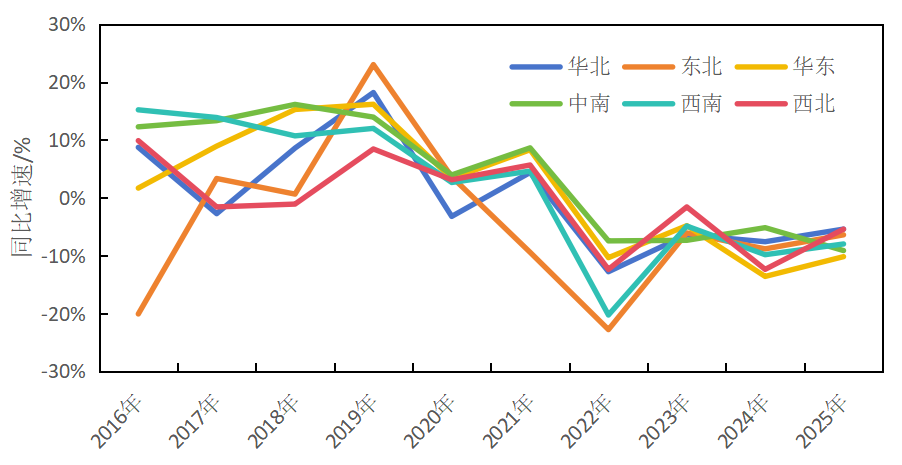
Figure 2 Year-on-Year Growth Rate of Ready-Mixed Concrete Production in Six Major Regions Nationwide Over the Past Ten Years
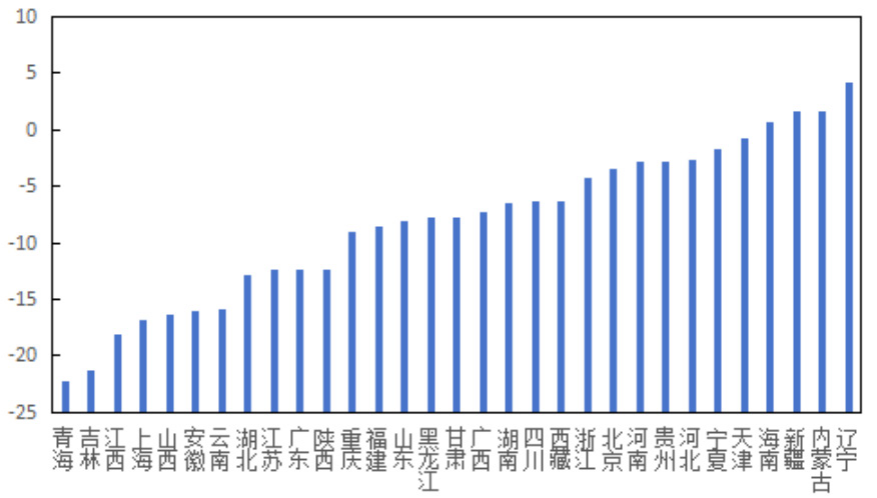
Figure 3 Comparison of Cumulative Production Growth Rates of Commercial Concrete by Province, Municipality, and Autonomous Region in 2025
(II) Prices Continue to Fall
The price of ready-mixed concrete over the past decade has maintained a downward trend after peaking at the end of 2021. Following the COVID-19 pandemic, the contradiction between supply and demand has become increasingly prominent. By the end of 2025, the price had broken a ten-year record low, dropping by more than 220 yuan/m3 from its peak. Figure 4 shows the decline in the average price of commercial concrete nationwide at the end of 2025.
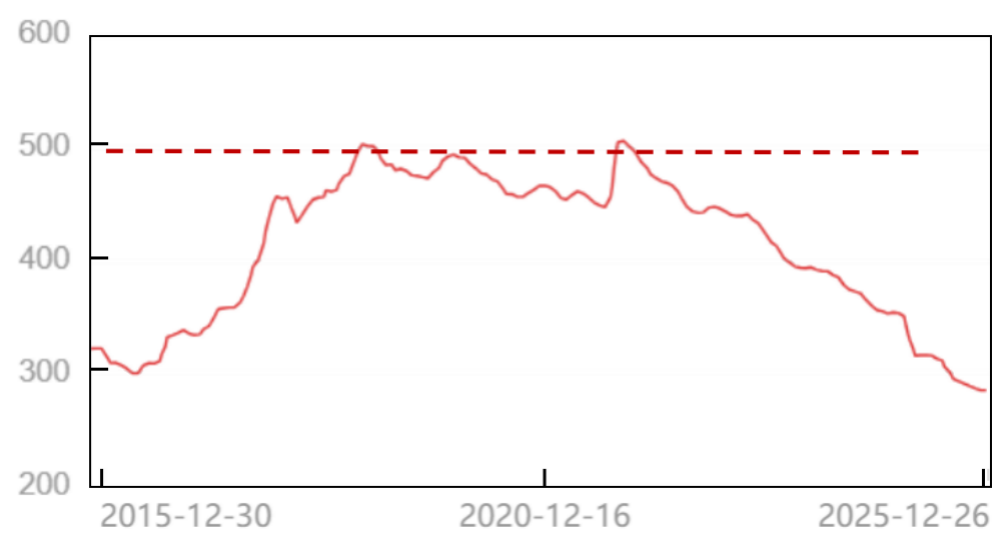
Figure 4 Decline in the Average Price of Commercial Concrete Nationwide at the End of 2025
Looking at the monthly trend within the year, the national price of ready-mixed concrete experienced a substantial adjustment before the Spring Festival in 2025, and a second major price plunge occurred between June and August, after which prices stabilized at a low level. At the end of 2025, the national average price of ready-mixed concrete was 284 yuan/m3, a decrease of more than 50 yuan/m3 from the beginning of the year. Figure 5 shows the monthly trend of national commercial concrete prices in 2025.
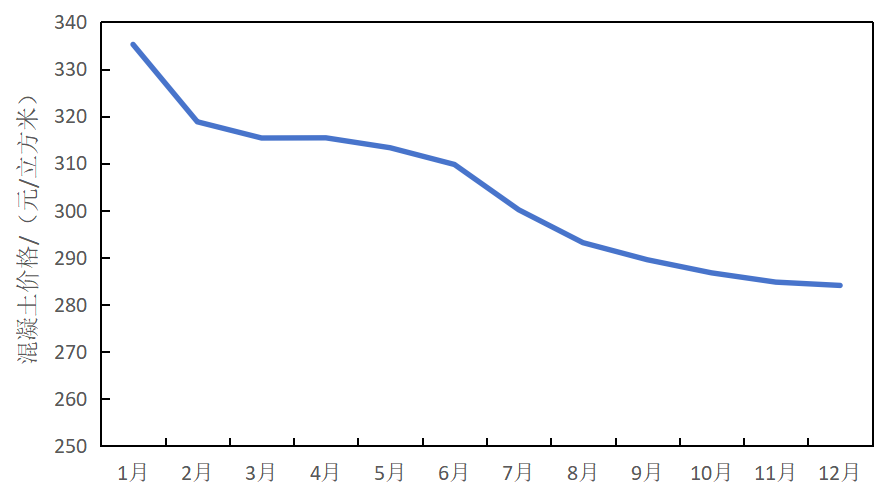
Figure 5 Monthly Trend of National Commercial Concrete Prices in 2025
Regionally, at the end of 2025, the average market price of ready-mixed concrete in East China was the highest, yet it still did not exceed 300 yuan/m3; North China and Northeast China became price depressions, with average market prices around 260 yuan/m3 at the end of the year. Compared with the same period in 2024, the price decline in South Central China was the largest, exceeding 20%; the price decline in Southwest China was the smallest, at less than 15%. Figure 6 shows the average prices of commercial concrete and their year-on-year status in the six major regions nationwide at the end of 2025.
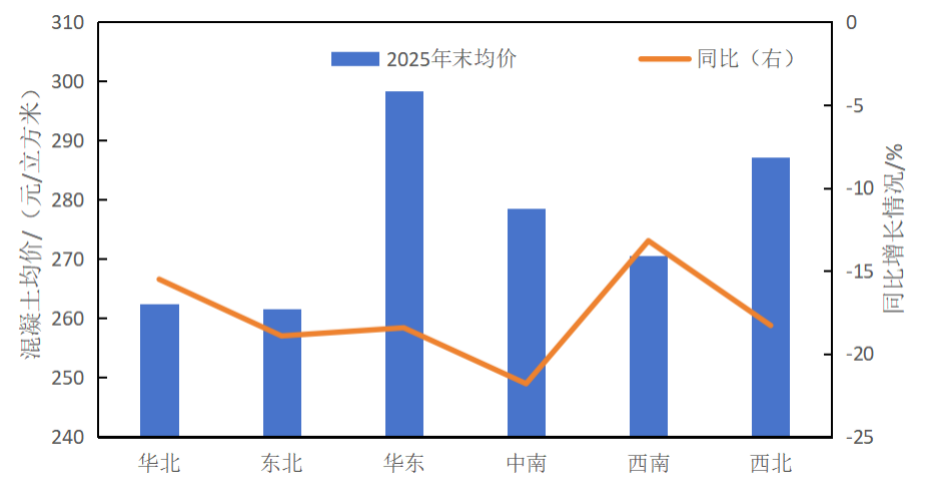
Figure 6 Average Prices of Commercial Concrete and Year-on-Year Status in Six Major Regions Nationwide at the End of 2025
From the intra-year trend, the prices of ready-mixed concrete in East China and South Central China steadily declined in 2025, while the prices in the other 4 regions underwent significant adjustments during different periods. Figure 7 shows the trend of commercial concrete price changes in the six major regions nationwide in 2025.
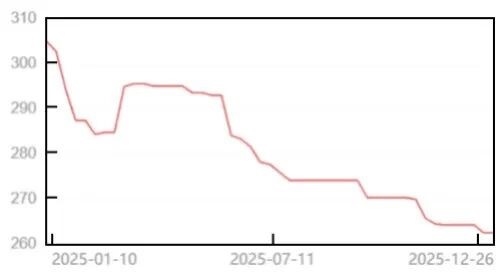
(a) North China
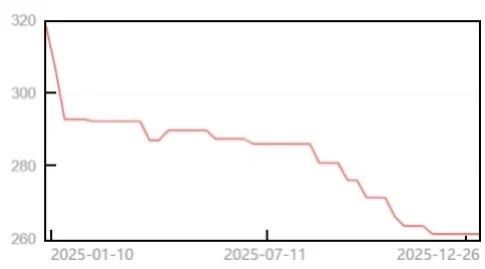
(b) Northeast China
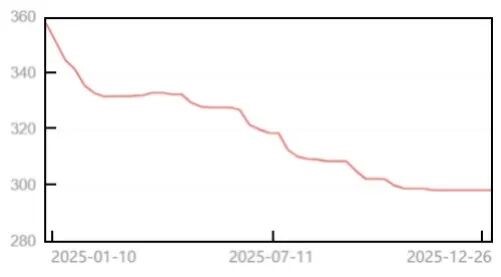
(c) East China
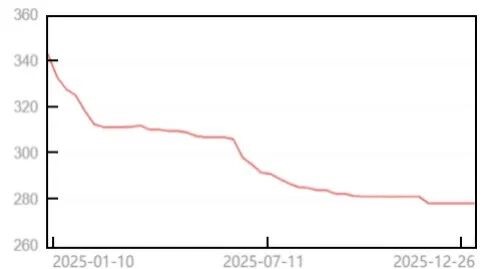
(d) South Central China
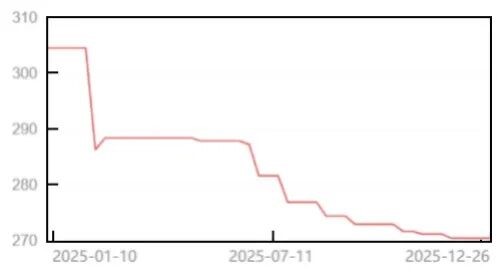
(e) Southwest China
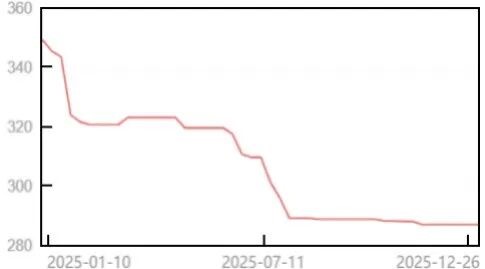
(f) Northwest China
Figure 7 Trend of Commercial Concrete Price Changes in Six Major Regions Nationwide in 2025
From a provincial perspective, comparing the end of 2025 with the beginning of the year, prices fell in all 30 provinces, municipalities, and autonomous regions nationwide (excluding Tibet), except for Chongqing. Excluding Chongqing and Xinjiang, the average market prices in the other provinces, municipalities, and autonomous regions all fell by more than 10 yuan/m3. There were 15 provinces, municipalities, and autonomous regions with a drop of more than 50 yuan/m3, among which Shanghai and Shaanxi saw drops exceeding 100 yuan/m3. Figure 8 shows the rise and fall of average market prices at the end of 2025 compared to the beginning of the year across various provinces, municipalities, and autonomous regions.
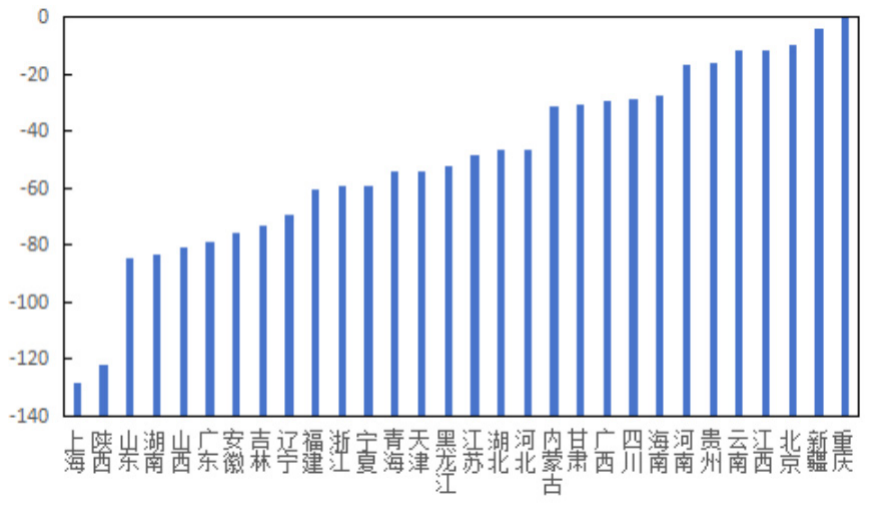
Figure 8 Rise and Fall of Average Market Prices at the End of 2025 Compared to the Beginning of the Year Across Provinces, Municipalities, and Autonomous Regions
(III) Economic Benefits Shrink Rapidly
According to statistics, from January to December 2025, the main business income of the concrete and cement-based product industry above designated size decreased by 15.5% compared to the same period last year, and the total profit decreased by 28.2% year-on-year. The entire industry’s main business income has been declining year-on-year since 2022, while the industry’s profit began to decline year-on-year prior to the main business income starting in 2011. Since 2024, the total profit of the entire industry has decreased by more than 20% year-on-year.
The annual production of the ready-mixed concrete industry in 2025 is expected to drop by nearly 10% year-on-year, with the annual average price dropping by more than 10%, and the industry’s main business income is expected to decrease by about 20%. The concrete sales volume and sales revenue of most listed companies have declined significantly, and product gross profit margin levels have also dropped notably.
Opportunities and Prospects for Industry Development
The way out for the ready-mixed concrete industry lies in “reconstruction.” Currently, the industry is experiencing the growing pains of transitioning from the old era of “scale expansion” to a new era of “quality and efficiency competition.” The path out of this predicament does not lie in waiting for the market to recover, but in taking the initiative to carry out a threefold reconstruction. The first is the reconstruction of product, shifting from homogenized ordinary concrete to high value-added products such as high-performance, special, and green low-carbon concrete; the second is the reconstruction of operational, utilizing digital and AI technologies to achieve ultimate cost reduction and efficiency enhancement in production, logistics, and management; the third is the reconstruction of business model, shifting from simply selling concrete to providing comprehensive “materials + technology + services” solutions, and even exploring new models such as capacity sharing and logistics platforms. The future of the industry belongs to those enterprises that can face deep-seated contradictions head-on and dare to carry out radical innovations in technology and management.
Given limited space, the report could not be presented here. If you want the complete report, please email icc@ccpa.com.cn.
China Concrete & Cement-based Products Association (CCPA)
Ms. Joselyne Wang
E: icc@ccpa.com.cn
M: +86 1314 6768 231
T: +86 10 5781 1219
http://www.chinaconcrete.com.cn